


A remote control mower and a ride-on mower both cut grass, but they are built for different ground. The ride-on puts a person on the machine and trades speed on flat, open ground for exposure on anything steep. The RC mower puts the operator 200 metres away and trades raw area-per-hour for the ability to work slopes, edges and obstructions a rider can't safely reach. If you're a dealer choosing stock, or a buyer choosing a machine, the question isn't "which is better" - it's "which fits the terrain I actually have."
Start with the slope
This is the single biggest divider. Most ride-on mowers are rated for gentle grades; past roughly 15° they lose traction, tip, or simply refuse the hill. Remote control mowers are engineered for exactly that ground - tracked drivetrains and tilt-cutoff logic let capable units hold and cut on slopes up to about 35°.
So the first question is honest: how steep is the worst ground you mow? Vineyard terraces, solar farms between panel rows, highway embankments, dam faces and orchard aisles are RC territory. Flat sports fields and city parks are ride-on territory.
Operator safety
On a slope, the risk isn't just a missed stripe - it's a rollover with a person on board. The RC format removes the operator from the machine entirely. For contractors bidding slope or roadside work, that's often the deciding factor: it keeps a person on solid ground with a radio in hand, not on a 30° face. Where the ground is safe and flat, the ride-on's seated operator is fine and faster.
Productivity and area
- Ride-on wins on flat, open ground: higher ground speed and wider decks mean more hectares per hour on a sports pitch or corporate lawn.
- RC wins on awkward, obstructed or graded ground: it goes where a rider won't - under orchard canopies, between solar rows, along water edges, up switchbacks. It's slower per hour but it reaches ground the rider physically can't.
In practice many fleets run both: a ride-on for the flat amenity areas, an RC unit for the slope and edge work neither rider nor worker with a string trimmer should attempt.
Cost and total cost of ownership
On flat ground, a ride-on is usually cheaper per mowed hour and simpler to service. The RC mower justifies its price where the alternative is a worker on a dangerous slope, a winch, or simply unmown ground. Frame it as risk-and-reach, not just sticker price: the RC unit often unlocks ground you otherwise can't safely mow at all.
Transport and storage
Ride-ons need a trailer and ramps; they're big and heavy. RC mowers - especially tracked 550-800 mm units - are compact, load into a van, and store in less space. For a contractor with a single vehicle, that footprint difference matters day to day.
Where each one clearly wins
| Use case | Ride-On | RC Mower |
|---|---|---|
| Flat sports field / park | Strong | Overkill |
| Slope > 15° | Unsafe / refuses | Strong (to ~35°) |
| Roadside / embankment | Risky | Strong |
| Vineyard / orchard aisle | Poor fit | Strong |
| Solar farm aisles | Won't fit | Strong |
| Large open amenity lawn | Strong (fast) | Slower |
| Single-vehicle contractor | Trailer needed | Van-loadable |
A note on hybrid fleets
We see successful contractors not "choosing one" but pairing them: ride-on for the weekly flat maintenance, RC for the slope, edge and seasonal work. If you're stocking as a dealer, that pairing is itself a sale - two machines, one customer, wider job coverage.
Frequently Asked Questions
Q: Can an RC mower replace a ride-on entirely?
A: On flat open ground, no - the ride-on is faster and cheaper per hour. On slopes and obstructed ground, the RC does work the rider can't. Most operations keep both.
Q: How steep can an RC mower safely cut?
A: Capable tracked units are engineered and tested to around 35°. A ride-on is generally unsafe past ~15°. Always match the rated angle to your worst slope, not your average.
Q: Is the RC mower slower, then not worth it?
A: Slower per hour on flat ground, yes. But it reaches ground a rider can't safely mow at all - so the comparison isn't speed, it's reach plus operator safety on dangerous terrain.
Q: Which is cheaper to own?
A: On flat amenity ground, the ride-on wins on cost per hour and service simplicity. The RC earns its keep where the alternative is unsafe slope work or unmown ground.
Q: Do I need both as a contractor?
A: Often yes. Ride-on for flat weekly maintenance, RC for slope, edges and seasonal work. Many fleets run the pair for full coverage.
Where RCVIX fits
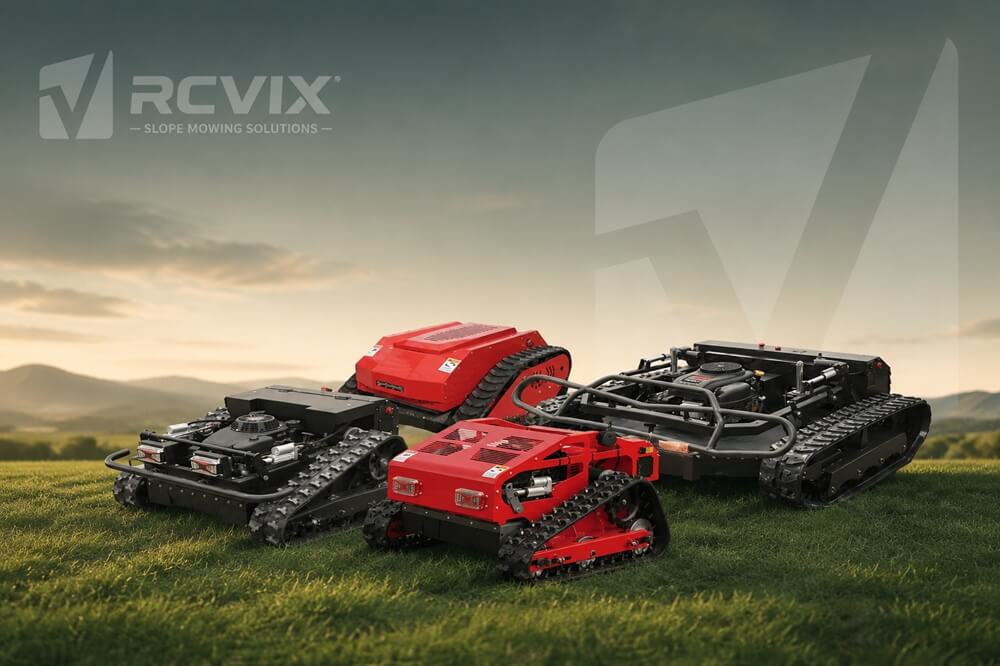
RCVIX builds remote control mowers as its core line - tracked 550-1200 mm units, flail and rotary decks, engineered for slope and edge work. If you're weighing which machine to stock or buy, our team can walk you through the terrain fit against your actual ground.
See the become-a-distributor guide or read our manufacturer-selection field guide before you decide.

Related Products
Professional-grade solutions for your operational requirements


Related Articles
Frequently Asked Questions
Shipping methods depend on the product type, destination, delivery timeline, and project requirements. Depending on the order, transportation may be arranged via: Sea freight Land transportation Multimodal logistics solutions The most suitable shipping method is determined during the quotation and order confirmation process.
Yes. Relevant shipping documents such as commercial invoices, packing lists, and transport documentation will be provided according to the shipment arrangement. Tracking information is provided where available through the logistics provider.
Yes. RCVIX is committed to establishing stable and long-term cooperation relationships with industrial clients and distribution partners worldwide.
Pricing is determined by several factors, including but not limited to: Machine model and technical configuration Power system and component selection OEM/ODM customization requirements Order quantity Packaging and shipping requirements Destination country and logistics conditions Each project is evaluated individually to provide a precise commercial offer.
Need a Custom Solution?
Our team of experts is ready to help you find the perfect vegetation management solution for your specific needs. Get a free consultation and quote today.
