


When buyers talk about remote control mower OEM and ODM, they mean two ways to put your own brand on a machine without building a factory. OEM is build-to-your-specification: you bring the design or detailed requirements, the manufacturer builds it. ODM is build-on-our-design: the factory's existing model becomes yours with the changes you choose. Both put your name on the unit — the difference is who owns the engineering.
OEM vs ODM, in practice
| OEM | ODM | |
|---|---|---|
| Who owns design | You | Factory (licensed to you) |
| Customization | Highest — full spec | Medium — livery, deck, controller tweaks |
| Time to first unit | Longer (dev + tooling) | Shorter (platform exists) |
| Best when | You hold patents or unique needs | You want fast, proven market entry |
Many partners start ODM to launch, then move specific models to OEM as volume and confidence grow. That path keeps risk low early and protects margin later.
Who this is for
- Established equipment brands adding a remote-control line without new tooling.
- Startups with a market but no factory.
- Distributors wanting an exclusive, ownable product.
- Regional players needing local-certified variants (CE, language, plug).
What RCVIX does in an OEM / ODM project
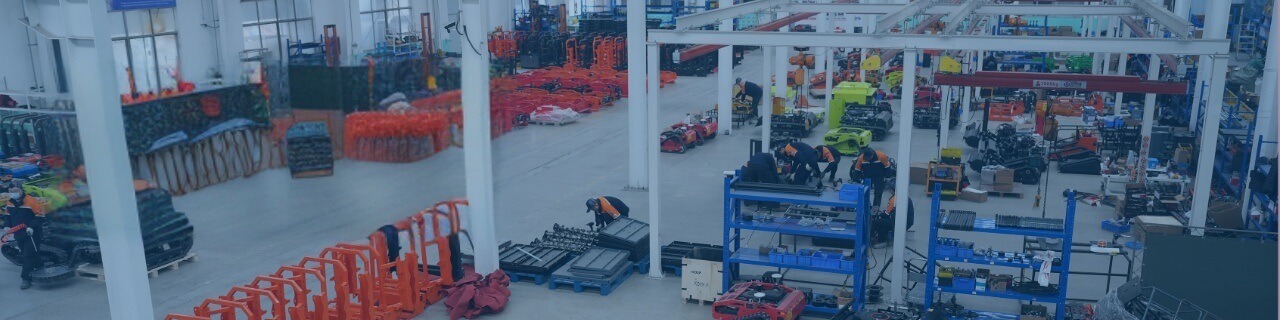
- Engineering support — we review your spec or adapt our platform: controller logic, cutting deck, track or wheel, battery.
- Customization — livery and colour, branded packaging, multi-language manual, decal and logo, even controller UI language.
- Compliance package — CE (Machinery 2006/42/EC, RED 2014/53/EU), ISO 11806 references, region documentation.
- Tooling & ownership clarity — we document which parts are yours versus shared, and how IP is handled per the agreement.
What you provide vs what we provide
| You provide | RCVIX provides |
|---|---|
| Brand, market requirements, target price, certification needs, volume forecast | Engineering, manufacturing, QC, compliance docs, packaging, training material |
Typical process
- Brief — your goals, volumes, target markets, must-have specs.
- Feasibility — we confirm what's OEM vs ODM and flag lead time.
- Prototype — sample unit, usually 30–60 days for OEM changes.
- Validation — you test on your terrain; we adjust.
- Tooling & MOQ — production setup; OEM often 100–200 units first run, ODM can be lower.
- Production & shipping — 25–45 days depending on volume.
MOQ and lead time, realistically
OEM first runs commonly land at 100–200 units because tooling and validation are fixed costs. ODM can start lower (often 50–100) since the platform already exists. Don't trust a quote promising 10-unit OEM with full custom tooling — that math doesn't close.
Red flags
- Factory won't put IP / ownership terms in writing.
- No prototype stage — they jump straight to a bulk order.
- Vague on which certifications apply to your market.
- Can't show a reference OEM / ODM partner.
Frequently asked questions
Q: Do I own the design in ODM?
A: Usually you license the factory's design; for full ownership choose OEM.
Q: Can you match my existing brand colours?
A: Yes — livery, packaging and manual are all part of the program.
Q: How long to the first unit?
A: ODM in weeks; OEM changes 30–60 days for a prototype.
Q: Do you handle CE?
A: We supply the CE documentation package for our models; market-specific certs we discuss per project.
Next step
See the RCVIX OEM / ODM partnership page or the distributor program, or contact us with your brief.


