


Sourcing remote control mowers from China can cut your landed cost 30–55% versus a European build and give you customization a small domestic workshop cannot. But the win is in the process, not the price tag. The buyers who get burned skip vetting and QC; the ones who build durable supply chains do four things consistently: define the requirement, shortlist real factories, vet hard, and control quality before payment. This guide walks the whole path.
Step 1 — Define your requirement before you shop
A vague brief gets vague quotes. Lock these first:
- Use case: solar rows, vineyard slopes, municipal turf, steep embankment, heavy brush?
- Ground: flat and clean, or rough/rocky/sloped? This decides wheeled vs tracked.
- Growth: fine grass, or brush, prunings and suckers? This decides flail vs rotary.
- Volume: annual units and first order quantity — it sets which program (OEM / ODM / private label) fits.
- Markets: which certification marks you must carry (CE, UKCA, FCC, others).
Step 2 — Build a shortlist of real factories
Find suppliers through more than one channel so you are not dependent on a single directory:
- Trade shows (Canton Fair, BAUMA China, regional outdoor-power expos).
- Supplier directories — but treat listings as leads, not verdicts.
- Referrals from other distributors who already import.
- Direct manufacturer sites and technical content (a real factory publishes specs, not just a price).
At this stage you are filtering for manufacturers, not traders. A trader can still serve you, but you should know which you are talking to so pricing and lead times make sense.
Step 3 — Vet the factory (audit checklist)
| Check | What a genuine manufacturer shows |
|---|---|
| Registration | Business license; consistent legal entity across quotes, contract, bank |
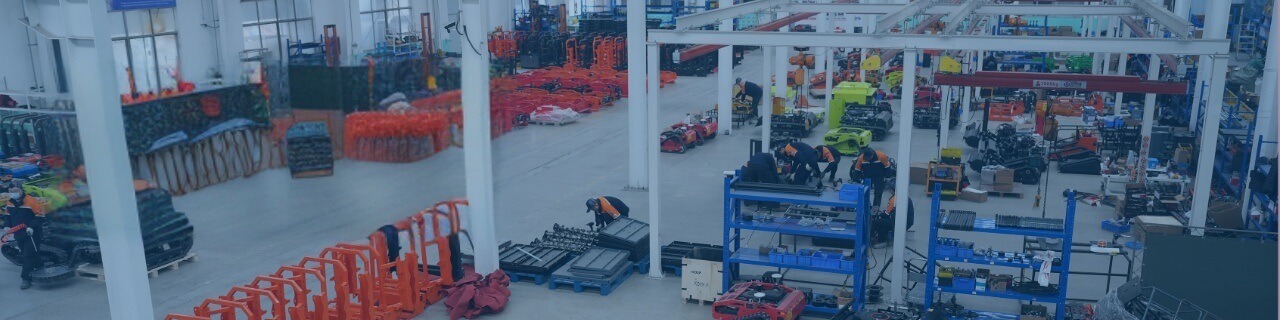
| Production line | Live video walk: welding, assembly, test rig — not just a warehouse |
| QC system | Incoming, in-process and final-test records; sample inspection reports |
| References | Existing B2B customers (under NDA if needed) |
| Engineering | Can discuss deck, hydraulic, remote specs — not only "we can do any" |
Step 4 — Order samples and test on your sites
Never scale from a brochure. Order 1–3 sample units and run them where they will actually work:
- Test the worst case you quoted: steepest slope, heaviest growth, narrowest gap.
- Check remote range and e-stop response with the operator in a realistic position.
- Time a known area to build your own throughput and crew-sizing numbers.
- Note what breaks or annoys in week one — that is your pilot-batch change list.
Step 5 — Quote and Incoterms
Understand what the price includes. Common Incoterms:
| Incoterm | Who moves it | Who pays freight/insurance | Customs |
|---|---|---|---|
| EXW | You | You | You |
| FOB | Factory → port | You (from port) | You |
| CIF | Factory → your port | Seller to port | You |
| DDP | Factory → your door | Seller (where allowed) | Seller (where allowed) |
Compare quotes on the same Incoterm. A low EXW price can become expensive once you add freight, insurance and clearance.
Step 6 — Control quality before shipment
Build pre-shipment inspection into the contract:
- A defined AQL (acceptance quality limit) for the batch.
- Verification of serial/build records and certification marks.
- Functional test of a sampled units: drive, cut, remote, e-stop.
- Photo/video evidence of the packed container before seal.
Red flags — stop and reconsider
- A "factory" that cannot show a production line or only sends warehouse video.
- No QC documentation and no reference customers.
- Price far below the market with no explanation of how.
- Pressure to skip inspection or pay 100% upfront.
- Vague answers on certification paths for your market.
Payment safety
A typical safe structure is a deposit to start production (30–50%) with the balance against inspection-passed goods or bill of lading. Use a contract that names the same legal entity as the bank and the quote. For larger programs, third-party inspection and escrow-style terms reduce risk further.
Frequently asked questions
Q: How many units is a sensible first sample order?
A: 1–3 units covering your worst-case site is enough to validate; you are testing the machine, not filling stock.
Q: What Incoterm is best for a first-time importer?
A: CIF or DDP (where allowed) keeps logistics in the seller's hands; EXW/FOB mean you manage freight and clearance yourself.
Q: How do I confirm a supplier is a real manufacturer?
A: Live production-line video, business registration, QC records and reference customers. Traders can be legitimate too — just know which you are dealing with.
Q: What should pre-shipment inspection cover?
A: AQL, serial/build records, certification marks, and functional test of sampled units (drive, cut, remote, e-stop).
Q: How long does sourcing take end to end?
A: Sample 15–25 days; pilot 30–45; volume PO 45–60 after spec is locked. Add time for tooling or certification.
Q: Is OEM / private label available from China factories?
A: Yes — most RC mower manufacturers run OEM, ODM and private-label programs; MOQ typically starts around 50–150 units per model.
Q: What certifications must I check for Europe / UK / US?
A: CE / RED for Europe, UKCA for the UK, and FCC / engine marks (EPA/CARB) for the US — confirm exactly what your destination requires.
Q: Can RCVIX supply under my brand?
A: Yes — see our OEM / ODM partnership and distributor program; contact us with your requirement.
Next step
If you want a manufacturer who publishes real specs and runs documented QC, talk to RCVIX with your use case and volume. We will scope samples, Incoterms and inspection together.


