


Steep slope maintenance is one of the most dangerous and labor-intensive tasks in vegetation management. Whether in orchards, solar farms, roadside embankments, or forestry areas, traditional mowing methods often expose operators to significant safety risks while delivering limited efficiency.
Modern remote-controlled slope mowers are changing how professionals manage difficult terrain. In this guide, we explore the safest mowing methods, key equipment considerations, and why remote-controlled mowing systems are becoming the preferred solution for steep terrain maintenance.
Why Steep Slope Mowing Is Dangerous
Mowing on uneven or steep terrain presents multiple operational hazards, including:
- Machine rollover risks
- Operator slips and falls
- Flying debris hazards
- Limited traction on wet surfaces
- Fatigue caused by prolonged manual operation
Traditional walk-behind mowers and handheld brush cutters often require operators to work directly on unstable ground, increasing the likelihood of accidents.
For commercial vegetation management companies, municipalities, orchards, and infrastructure contractors, safety is now a primary consideration when selecting mowing equipment.
Common Challenges in Slope Vegetation Management
1. Limited Machine Stability
Conventional mowing equipment is typically designed for flat terrain. On steep slopes, traction loss and instability become major operational problems.
2. Dense Vegetation and Brush
Slope areas often contain:
- Tall grass
- Dense weeds
- Small bushes
- Uneven undergrowth
These conditions require more powerful cutting systems than standard lawn mowers can provide.
3. Difficult Operator Access
Roadside embankments, drainage ditches, orchards, and solar farms may contain areas that are unsafe or inaccessible for manual mowing.
4. High Labor Costs
Manual brush cutting on slopes is slow and labor-intensive, especially for large-scale vegetation maintenance projects.
Modern Solution: Remote-Controlled Slope Mowers
Remote-controlled slope mowers are specifically engineered for hazardous and uneven terrain environments.
Unlike conventional mowing systems, operators can control the machine remotely from a safe distance, significantly reducing operational risks.
Key Advantages
- Remote operation improves operator safety
- 4WD systems provide better traction
- Heavy-duty cutting systems handle dense vegetation
- Improved efficiency for large maintenance areas
- Reduced labor intensity and fatigue
These machines are increasingly used in:
- Orchard maintenance
- Vineyard vegetation control
- Solar farm grass management
- Highway embankment mowing
- Forestry undergrowth clearing
What Features Matter Most in a Slope Mower?
When selecting equipment for steep terrain mowing, several features are especially important.
Remote Control Capability
Remote operation allows operators to avoid direct exposure to dangerous terrain conditions.
Professional systems typically provide long-range control with responsive steering and speed adjustment.
Slope Climbing Performance
Machines designed for slope maintenance should offer:
- Low center of gravity
- Stable chassis design
- High-traction tire systems
- Strong climbing capability
Heavy-Duty Cutting System
Dense vegetation requires industrial-grade blades capable of handling:
- Thick grass
- Brush
- Small branches
- Rough terrain debris
Heat-treated manganese steel blades are commonly used for durability and impact resistance.
All-Terrain Mobility
Independent four-wheel drive systems improve performance on:
- Mud
- Gravel
- Wet grass
- Uneven surfaces
Pneumatic off-road tires further enhance stability and traction.
Expert Insight
Remote-controlled mowing systems significantly reduce operational risks in unstable terrain environments while improving overall vegetation management efficiency.
For many commercial operators, remote slope mowers are now considered a safer and more cost-effective alternative to traditional manual clearing methods.
Recommended Equipment for Steep Slope Maintenance
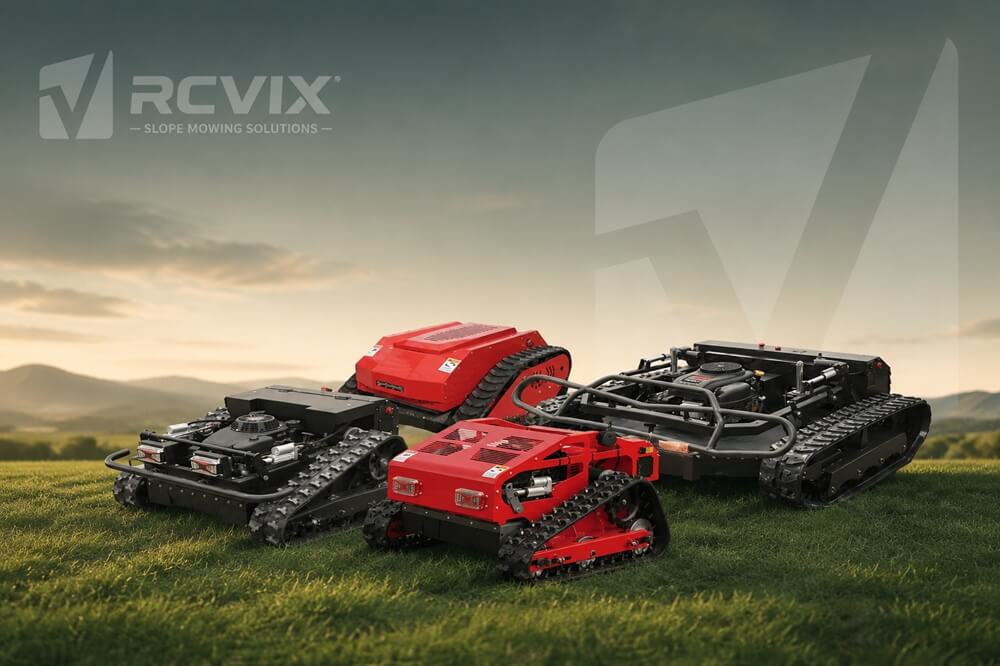
Professional remote mowing systems such as the RCVIX RCV-500 are specifically designed for demanding terrain applications.
Key capabilities include:
- 500m remote control range
- 35° slope climbing capability
- Hybrid self-charging system
- 4WD off-road drive system
- Heavy-duty industrial cutting assembly
These features make remote-controlled equipment particularly suitable for commercial and industrial vegetation management projects.
Applications of Remote Slope Mowers
Orchard Maintenance
Steep orchard rows often require precise and stable mowing equipment capable of operating safely on uneven ground.
Solar Farm Vegetation Control
Remote mowing systems help maintain vegetation around solar installations while reducing labor costs.
Highway Embankments
Roadside slopes present high-risk environments where remote operation significantly improves safety.
Forestry and Land Clearing
Heavy vegetation and brush clearing require durable industrial-grade mowing equipment.
Frequently Asked Questions
What is the safest way to mow steep slopes?
Using remote-controlled slope mowing equipment is generally considered one of the safest methods because operators can work from a safe distance.
Can remote mowers reduce labor costs?
Yes. Remote-controlled mowing systems improve efficiency and reduce the amount of manual labor required for vegetation management.
What terrain can remote slope mowers handle?
Professional remote mowers are designed for grass, mud, gravel, slopes, orchards, and rugged off-road terrain.
Are remote mowers suitable for commercial use?
Yes. Many industrial-grade remote mowers are specifically designed for commercial vegetation management, infrastructure maintenance, and agricultural applications.
Conclusion
As safety regulations and labor costs continue to evolve, remote-controlled slope mowers are becoming an essential solution for professional vegetation management.
Compared to traditional manual methods, modern remote mowing systems offer:
- Improved safety
- Higher efficiency
- Better terrain capability
- Reduced labor intensity
- Enhanced operational reliability
For orchards, solar farms, roadside maintenance, and rugged terrain applications, industrial remote-controlled mowing equipment provides a more effective and safer approach to slope vegetation management.

Related Products
Professional-grade solutions for your operational requirements


Related Articles
Frequently Asked Questions
RCVIX offers a range of industrial remote control machinery focused on slope mowing and terrain maintenance applications. Depending on the model, our equipment is designed for vegetation management, hillside operations, roadside maintenance, and other demanding outdoor environments requiring high stability and efficiency.
Price variation is normal in industrial equipment supply because each order may involve different: Technical specifications Custom engineering requirements Branding or OEM modifications Shipping destinations and logistics complexity After-sales or service requirements Therefore, pricing is always project-specific rather than standardized.
An order is considered confirmed only after: Written commercial confirmation Agreement on technical specifications Receipt of the required deposit payment Production scheduling begins after formal order confirmation.
Yes. RCVIX is committed to establishing stable and long-term cooperation relationships with industrial clients and distribution partners worldwide.
Need a Custom Solution?
Our team of experts is ready to help you find the perfect vegetation management solution for your specific needs. Get a free consultation and quote today.
