


Pasture and ranch mowing means long hours across uneven ground, fence lines choked with brush, and slopes that tire both animals and operators. A remote control mower lets one person cover serpents of paddock, scrub and fence line without riding the machine or swinging a brush-cutter all day — cutting the risk of fatigue, slips and thrown debris.
The challenge
- Time and ground. Large holdings mean days of manual cutting to keep grazing quality up; contract mowing is costly and scarce at peak season.
- Brush on fences. Brambles and woody growth along boundaries shade pasture and harbour ticks, snakes and pests that hurt livestock.
- Slopes and rough ground. Tussocky, rocky sides are unsafe and slow on a ride-on, and get skipped — letting scrub advance.
- Animal safety. Loose wire, stones and uneven ground risk livestock; clean paddocks reduce injury, foot-rot and flystrike.
The right machine
A tracked or flail remote mower matches the ground. The flail head clears brush and mulches it into the sward; the tracked chassis climbs the rough sides and holds the fence line. The operator walks the boundary in comfort, clear of noise and vibration, and an electric head works near stock without disturbance.
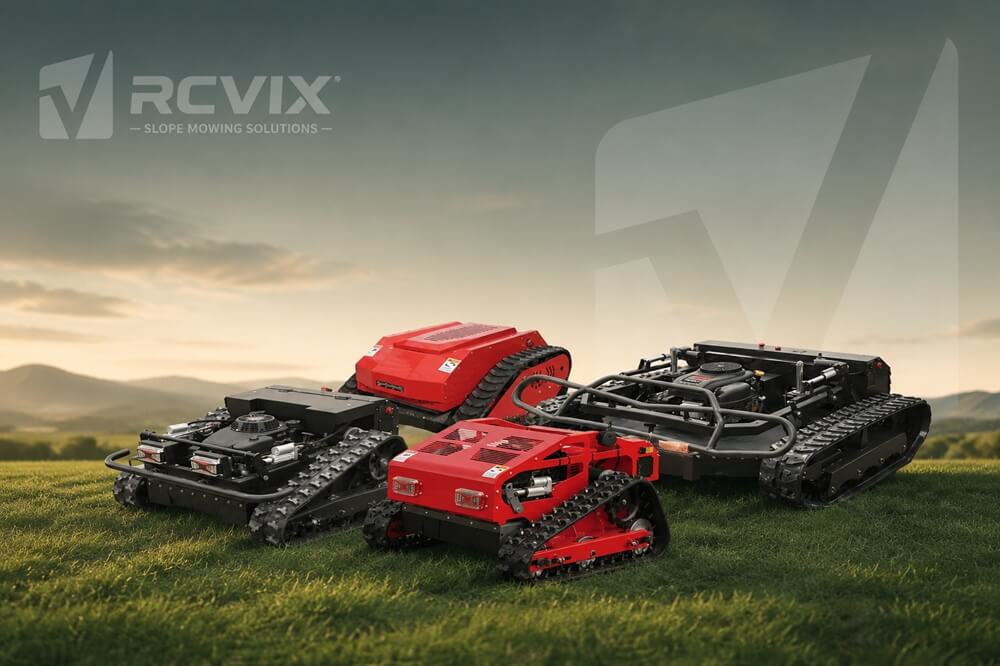
For very rough reclamation the tank unit adds weight and climb; for tidy estate banks the lighter tracked unit is the better daily driver. Either way one person does the work of a crew.
Typical scope
- Paddock and grazing-rotation cutting.
- Fence-line and boundary brush clearing.
- Invasive species and scrub control.
- Firebreak and perimeter cutting.
Compared with alternatives
| Method | Operator effort | Brush | Area/day |
|---|---|---|---|
| RC mower | Low (walk) | Yes (flail) | High |
| Ride-on | Medium | Poor on rough | Medium |
| Handheld crew | High | Yes (slow) | Very low |
| Hired grazer | None | None (cost) | Seasonal |
The remote mower beats a ride-on on rough ground and a handheld crew on speed and safety; it is the only option that is both low-effort and brush-capable, which is why mixed farms adopt it.
The business case
One operator covers far more ground than a brush-cutter crew, with no rider fatigue and no fuel bill for a tractor. Clean fence lines lift grazing quality, cut tick and snake habitat, and keep boundaries defensible — a measurable return on a single machine, paid back in a season or two on a mid-size holding.
Against hiring grazers, the mower gives control of timing (cut before seeding, not when agistment suits) and avoids introducing neighbours' weeds and parasites with borrowed stock.
FAQ
Handles brush? Yes — the flail head clears fence-line brambles and mulches them into the sward.
How much ground? A full paddock in a fraction of the manual time; output scales with terrain and operator skill.
Steep sides? Tracks hold slopes a ride-on cannot, safely and without a rider.
Quiet model? The electric version works near stock without disturbance or fumes.

Related Products
Professional-grade solutions for your operational requirements


Related Articles
Frequently Asked Questions
Yes. Operators should understand the machine’s operational procedures, safety guidelines, terrain limitations, and emergency controls before use. Proper training helps ensure safe and efficient operation under industrial working conditions.
RCVIX uses a combination of standardized components and model-specific parts. Critical wear components are designed for easy replacement, while specialized parts may vary depending on customization level and machine configuration.
The buyer should inspect the shipment immediately upon arrival. If any visible damage is identified: Notify the carrier immediately Record photographic evidence Contact RCVIX as soon as possible with shipment details Damage claims may require coordination with the logistics provider depending on the applicable shipping terms.
No. RCVIX does not publish fixed prices on the website because our products are industrial-grade equipment with configurable specifications. Pricing varies depending on model selection, technical configuration, customization requirements, order volume, and destination market conditions. We provide tailored quotations for each inquiry to ensure accurate and project-specific pricing.
Need a Custom Solution?
Our team of experts is ready to help you find the perfect vegetation management solution for your specific needs. Get a free consultation and quote today.
